Some years ago, I met an ERP implementation team that was able to deliver tangible business results in just six months, where eight other teams at the same company had stalled.
From Pocket http://ift.tt/2mUYHW8


Some years ago, I met an ERP implementation team that was able to deliver tangible business results in just six months, where eight other teams at the same company had stalled.
From Pocket http://ift.tt/2mUYHW8
5G should be 10 to 20 times faster than today’s cell-phone networks. 5G will operate in a high-frequency portion of the radio spectrum, known as millimeter wave. It has a lot of available bandwidth and should make it possible for wireless devices to process data with minimal delays.
From Pocket http://ift.tt/2njZBsY
When I think about what data I’d like to see IT operations departments measure and report, there are two key things that I think of: How happy are the users of the IT service? How much disruption are IT failures causing to business users? I recently had the pleasure of seeing a demo of the lat
From Pocket http://ift.tt/2lXv3fJ
 According to search technology firm Lucidworks, businesses typically only analyse around 10 per cent of the data they collect.
In the time of the ITIL update to version 3 I was involved with updating the ITIL training materials at Getronics PinkRoccade (former PinkElephant). One of the discussions we had was about the underlying principles of ITIL. These principles were not made very explicit in the books; their existence were mostly only mentioned in the introductions. I did a search through all the books and distilled some more implicit principles into a slide that we started using in the introduction in all the different ITIL courses at that time.
Recently, with all the discussions about the differences and similarities between ITIL, DevOps, SIAM, etc., I was wondering if these principles were still relevant. In his guest blog on the ITSM Review. ‘Why is this content at the end of the conference? This should be a Keynote topic!’ – CEO” Paul Wilkinson refers to his guiding principles on Service Management:
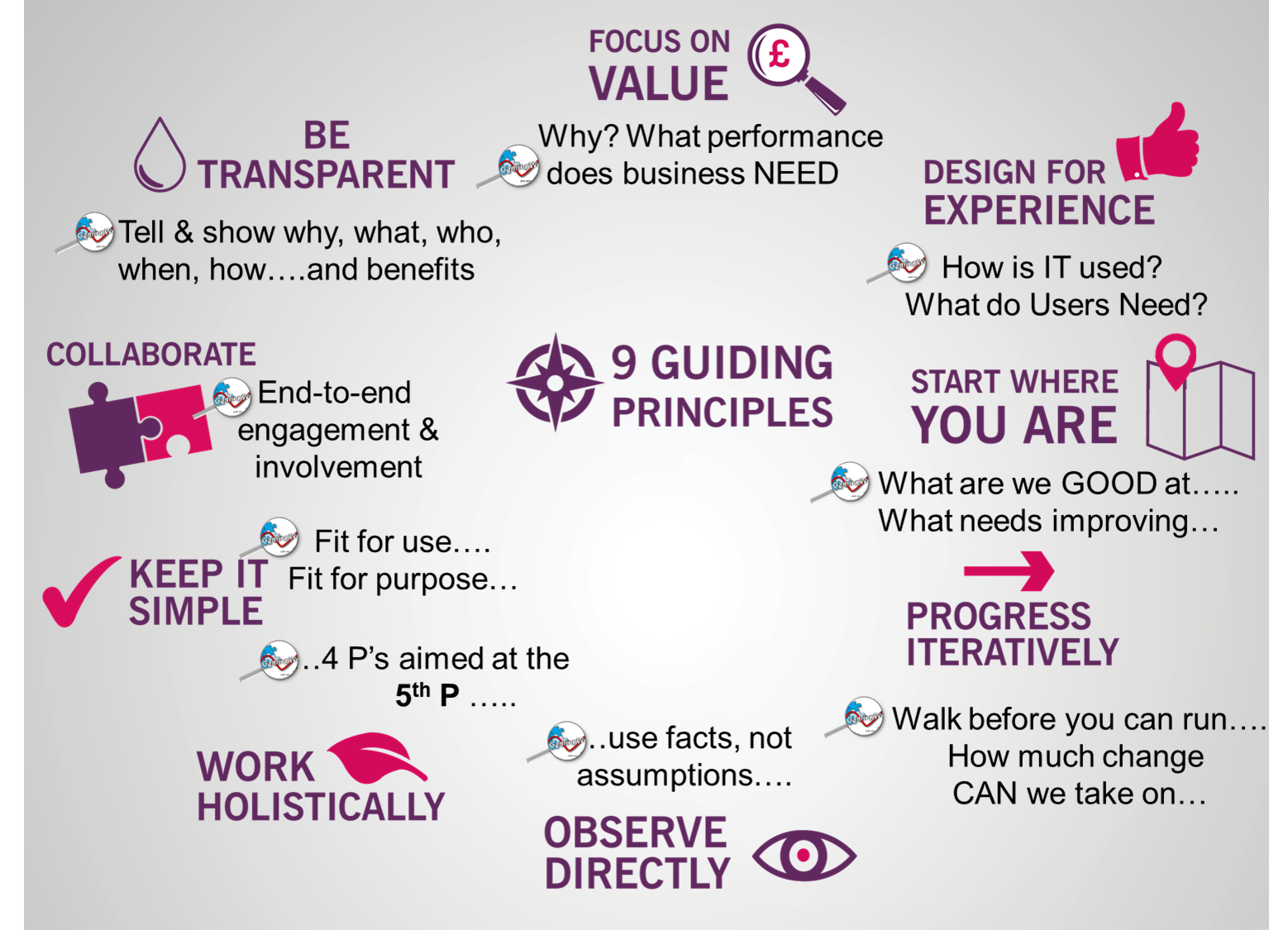
These principles refer directly to Attitude and Behavior of the IT workers delivering services and value to the business. The principles we found so many years ago refer to the organization of IT delivering the services as well and I feel they complement Paul’s principles as well as adding another perspective.
 The real problem isn’t that people don’t create a plan for event management, but that the plan they create does not consider the right relationships.
 event management should be the process nominated for best supporting actor, since in reality it is part of the groundwork for the one Main Event
To meet the challenge of delivering IT in this new environment, smart organisations are looking to implement IT service management (ITSM).
Source: Why Software License Optimisation is the Key to IT Service Management
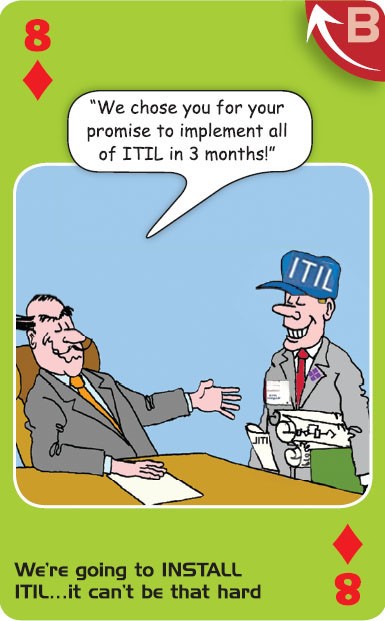
Following the awesomeness of #PINK16 last week, we were lucky to bump into @gamingpaul! Paul very kindly agreed to write a guest blog for us on his session, so here it is in all it’s glory! ‘Why is this content at the end of the conference? This should be a Keynote topic!’ – […]
Source: Guest Blog from PINK16: Paul Wilkinson of GamingWorks – The ITSM Review
The way to achieve the best of both worlds is through the standardisation and predictability of a formal (but agile!) approach to ITSM.

 Idwell on Service Management