

Source: New research reveals frustration with ITSM reporting
Category Archives: IT Management
Why are changes to IT so slow?
The description of change in ITIL does not include fast. It talks about cost-effective and minimum risk, which both implies a bit of slowness. So one of the questions the business have to answer is their prioritization. Fast, with a higher risk or slower with a less risk. If you want both, you need probably need to do major changes to your IT infrastructure, neither cheap or risk free.
Source: Why are changes to IT so slow? — Disruptive architecture
No speed without quality: How structured Problem Management drives IT stability
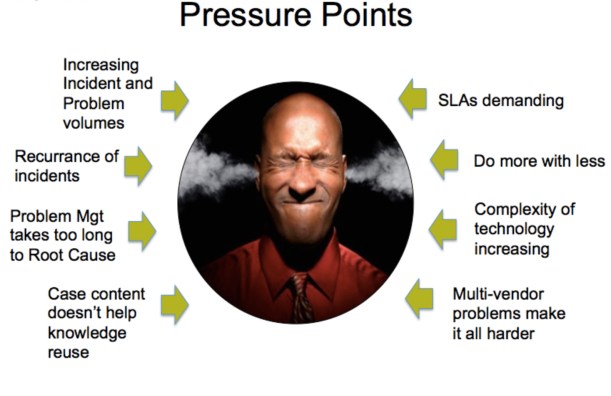 RCA thinking gets results: with training and support of shared, structured processes for Problem and Incident Management, IT organizations can increase stability
Source: No speed without quality: How structured Problem Management drives IT stability – Kepner-Tregoe
ISO/IEC 20000 part 11 published – guidance on relationship between ISO/IEC 20000-1 and ITIL
Introduction ISO/IEC TR 20000-11 Information technology – Service management – Part 11: Guidance on the relationship between ISO/IEC 20000-1:2011 and
ITIL & ISO 20000 | ITIL strategy: Framing the value of services (part II)
Understanding the impact of Utility and Warranty on service value will help you in quantifying and measuring it using methods outside ITIL framework
Source: ITIL & ISO 20000 | ITIL strategy: Framing the value of services (part II) | 20000Academy
How to transform your service desk with Knowledge Centered Support
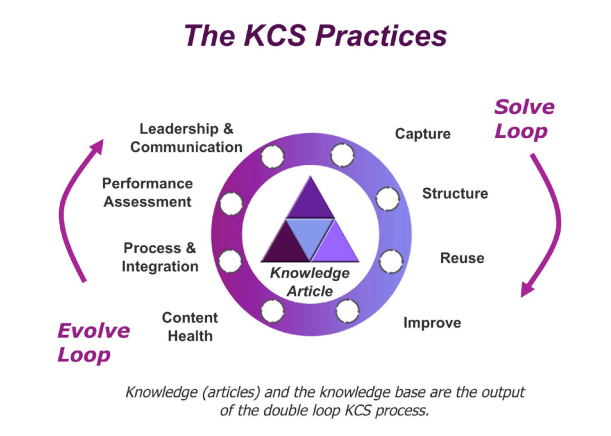 The Digital Revolution is creating huge opportunities for innovation and productivity in the workplace. However, this brings significant challenges to enterprise support functions. The scope of technical support is widening as technology moves from the back-office to the front-line. As a result, support organizations are expected to provide support for an ever-wider range of technology, …
Source: How to transform your service desk with Knowledge Centered Support – BMC Blogs
Does ITIL fit the new style of IT?
Business technology has changed dramatically since the ITIL books were written and subsequently revised. Tony Price of HP discusses whether the guidance offered by the framework is still relevant.…
How to implement basic ITIL Change Management?
When a company transitions to a new business model, following an acquisition or restructuring, there is major change which affects employees, customers and the
Source: How to implement basic ITIL Change Management? | Wolken blog
If IT only acts like a utility…
What is a “utility”? According to dictionary.com, a utility is “something useful; a useful thing; or the capacity of a commodity or a service to satisfy some human want”. Often I hear IT organizations refer to what they do as being like a utility, much like a telephone system, public transportation, or electric system. Just … Continue reading If IT only acts like a utility… →
IT Service Management: Transforming IT from managing technology to empowering business
IT is evolving from simply managing technology to becoming a trusted strategic business partner that empowers the business.
Source: IT Service Management: Transforming IT from managing technology to empowering business
 Idwell on Service Management